10 Apr 2013
 Posted by admin
AA fictitious Mark Zuckerberg pits himself against Harvard’s longstanding and controversial men’s social clubs, otherwise known as final clubs, in 2010’s “The Social Network.” Zuckerberg disparages one final club in particular—The Phoenix—and Phoenix member Eduardo Saverin. Though he outwardly castigates Saverin in matters related to the hierarchical and exclusive nature of private fraternal orders, Zuckerberg’s Facebook embodies the contrariness of this rejection. The “Like” button, the power to “de-friend,” to ignore requests, or publicly humiliate. These features starkly align with final club rituals and practices, in effect, making Facebook a billion-member version of that which it reproaches.
The moral/relevance of “The Social Network” is that humans intrinsically want for some form of convivial interaction. If they could, they’d all punch— “punch” as in, attend events arranged to suss out potential new members—a Harvard final club, but for the large percentage of the population who aren’t between the ages of eighteen and twenty-one or capable of wrangling a congressional letter of recommendation, thank God for Facebook…until now.
Dan Houston’s Parlor New York provides an enticing alternative. A post-collegiate second chance of sorts, similar to “Old School” when Will Ferrell and Luke Wilson start their own fraternity, minus the streaking and with the addition of free filet mignon member dinners and a stellar wine cellar. “You’re my boy, Blue!”

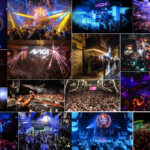
Dan Houston is bringing something new and fresh to NYC nightlife with Parlor New York
Dan, a 2001 Harvard grad and lifelong Phoenix broheim moved from Beantown to the city Red Delicious just three short years ago with sights set on creating a membership club loosely modeled after the final club he so cherished. “In final clubs, parties are a big element, but it’s not a constant element. That’s the distinction between us and pure nightlife in New York…they’re always trying to put on a great party and for us it’s a very different rhythm. We’re looking to put on an amazing party a couple times a month. Other than that, it’s a great place for somebody to host their friends; to have a more loungy, comfortable vibe,” says Dan.
Parlor marks Houston’s first venture into the world of hospitality. The entrepreneur, whose background is in software, admits he felt slightly wet behind the ears at first. But he relied on the support of his two primary business partners—each with their own Harvard club lineage— and some good advice from industry mainstay Michael Stillman. Stillman, owner of Quality Meats, The Hurricane Club and a slew of other popular restaurants, insisted that the key to finding the right venue where to plant your roots is making sure the plumbing’s already in place and that no other major renovations are needed. Previously Harbour, a seafood restaurant; and before that, Jet Lounge, a mid to late ‘90s vogue cocktail haven, Parlor definitely came with all the trappings. All Dan had to do was give the place proper finessing.
Inspired by Soundgarden frontman Chris Cornell’s Parisian nightclub Black Calvados as well as Tom Ford’s New York flagship, Dan aimed to achieve chic without resorting to novelty when it came to Parlor’s design. “I find that nightlife interiors fall into two categories. One is this sort of tacky, modern aesthetic…I call it the Las Vegas aesthetic. Then there’s this retro, ‘Hey, let’s pretend it’s 1930 aesthetic,” says Dan, a non-proponent of either.
While he’s thoroughly opposed to a motif founded on silliness or transporting people into a fake world, Dan isn’t so much against the use of explicit photography to influence mood. The current wall art, a la fashion photographer Roxanne Lowit, features modest tit and ass images, a distant cry from some of Parlor’s previous instillations. “The first art exhibit here had some really controversial pieces. My mother was really upset actually. She called me and told me to take the art down,” says Dan, referring to the previously featured erotic bondage shots by Nobuyoshi Araki.
If toned down T&A isn’t enough to stimulate the senses, Dan has also opened up the space as a cultural showcase for fashion designers, entrepreneurs, guest chefs and other experts in their field. Currently, 300 members pay a $1,500.00 annual fee to partake in the destination experience Dan and his team have created. Though he remains tightlipped about what it takes to ensure entry into 286 Spring Street, he does offer, “If they’re (applicants) an asshole, then we’re not going to accept them.” Fair enough.

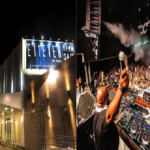
Behind this black door is Parlor. This space was once the home of legendary NYC hotspot Jet Lounge
He calls the current membership a mixed bag of culturally curious individuals and relishes the fact that access isn’t based on occupation. Regarding other social clubs that only allow people in specific fields of interest to join, Dan says, “It’s a bunch of garbage! You’re not a guild, why would you do that? The objective is to bring good people together…it’s silly criteria.”
Those interested in joining need only fill out an application on Parlor’s website, www.parlornewyork.com. Preliminary questions ask applicants to describe their most significant professional accomplishment, list a piece of art that inspires them and check off whether they’ve visited the Frick Collection, the Guggenheim, Burning Man, Art Basel, The Grammy’s, and so forth.
With Parlor, Dan drew inspiration from a centuries-old mix-n-mingle model:
- Build a beautiful clubhouse
- Interview and select members
- Distribute door keys to members so there’s a sense of ownership
- Serve complimentary dinners so members visit the club often
- Throw great parties
- Connect members for business or travel purposes
“The biggest challenge in New York is simply doing something new in a meaningful way. Innovation and experimentation are expensive activities in hospitality, and especially so in New York,” says Dan. For these reasons, there’s an innovation void that exists and Dan aims to fill it. “There just aren’t that many venues that are pushing original formats or developing their own technology. A lot of the innovation that you see in New York hospitality is really surface level…new drinks, new interiors, new venue names—but the same people running the same spaces with the same systems.”

Parlor’s design aesthetic was inspired by Parisian nightclub Black Calvados
In partnership with Salido, a restaurant and nightlife CRM (customer relationship management) web company, Dan hopes to simplify the act of going out, so much so that Parlor members won’t even need to communicate their desires. Salido will work with Parlor’s point of sale system to track client’s unique habits.
Say, for instance, member Mitch Martin likes the combination of Belgian beer and Swedish Waffles. He refuses to go to the restroom in a public establishment unless someone stands outside his stall humming “Everybody’s Free (To Feel Good)” from Baz Luhrmann’s “Romeo & Juliet.” He also claims to be allergic to fiddlehead ferns, but secretly just hates the way they taste. Salido maintains information like this on behalf of Parlor and, should a server even mention the words “fiddle” and “fern” in the same sentence around Mitch, it’s off with their head.
Too bad for Mitch, his “asshole” affliction violates Dan’s only hard and fast rule. If you aspire to make it past Parlor’s black façade, don’t be a Mitch and maybe don’t cite “The day I peed in the break room Keurig machine” as your most significant professional accomplishment on your application. Other than that, Dan wants you “clubbable” blokes and blokesses to treat the place like a home away from home. If yours is the sort of home where “True Blood” actor Joe Manganiello and “I Hope They Serve Beer In Hell” author Tucker Max stop by to celebrate the release of fitness guru John Romaniello’s new book. Romaniello’s release party takes place later this month.