31 Jul 2013
 Posted by admin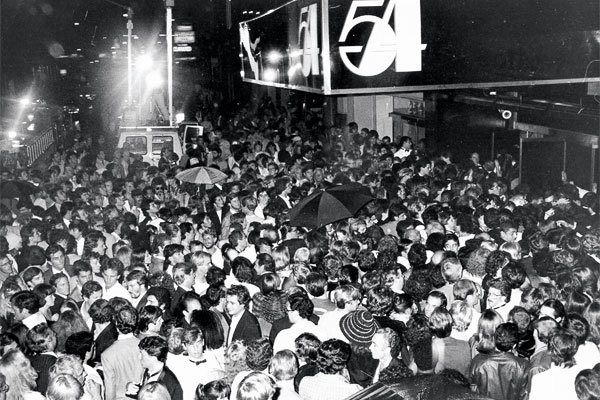
By Matthew Cowan
Editor’s note: Matthew Cowan is a freelance writer and educator based in his native New York City. He has written for The Village Voice, New York Press, Black Book, Heeb Magazine, High Times and many other publications. He’s just completed his first novel “The Thelonious Project”. He is a New York nightlife veteran and a married father of two. This is his account of the impact of technology on nightlife.
SSame as it ever was, right? Innovation X will ruin experience Y. That hoary cliché – ironically enough – remains one constant in an otherwise ever-changing world. You can plug in what you like: X = the electric guitar, Y = folk music; X = e-mail, Y = the intimate and thoughtful way in which loved ones stay in touch; X = gay marriage, Y = the historically sacred bonds of matrimony. Whether any of these hold true is mainly irrelevant. People just find it necessary to reflect on how the new impacts their relationship with the old.Lately, many of us have become strongly opinionated about advancements in consumer technology & social media. Apples and Androids pervade every aspect our daily, and nightly, goings on. I’m not breaking any news when I point out that people today – particularly the younger demographic – constantly gorge themselves on a cyberfeast of Facebook, Twitter, Instagram and whatever makes itself available between when I write this and when it’s published.

Image: Angel Boligán
This pretty much sums up society’s relationship with the smartphone.
As far as I know, the Buddha never found himself pulling up to a place like Marquee simultaneous to a dozen cabs attacking street curbs on an insanely crowded Wednesday night. An inebriated mass chanting the name of the club’s general manager, “Goldberg! Goldberg!” Their cell phones filling the air, blinking red lights indicating the ubiquitous recording of Goldberg’s manic arrival. But Buddha and his ascetic disciples might have a word or two of wisdom for club goers nonetheless.
Jon Kabat-Zinn, a Buddhist guru of and for our age, says, “Anything and everything can become our teacher of the moment, reminding us of the possibility of being fully present: the gentle caress of air on our skin, the play of light, the look on someone’s face, a passing contraction in the body, a fleeting thought in the mind. Anything. Everything. If it is met in awareness.” Being in the moment means existing now. Not succumbing to the grueling modern temptation to somehow be everywhere at once and record everything for future consumption.
I’m terrible at being Buddha-like myself. In fact, I’m writing these lines on my phone as I weave down a Tribeca street on a beautiful summer day. Noticing not the gentle breeze, play of light, or even the fly downtown honeys during sundress season. When I’m not the party guilty of typing and walking, I loathe others who do. Bloomberg should hire unemployed NBA refs to call charges on people who bump into you while texting. Six charges and you foul out of New York.
I should know better.
Because I know what it’s like to sit on the back of a bus rutting the dirt roads of Guatemala towards magnificent pyramids with nothing but my eyes and my thoughts to record the experience. I also know the flip side; watching my little son take his first steps up a playground construction and being so busy trying to save the moment for posterity that I might as well not have been there at all.
My nightlife years – for what they’re worth – pretty much cleaved the new media era. I spent a decent chunk of them being out when, if you wanted to meet up with your friends, you had to know their habits really well, leave a message on their machine, or scour the city like a stalker. Then, I had a good run post-that where just a text – “at The Box. lots of girls. come thru” – did the trick.I’m not that big on social media. Not Facebook, Instagram or Twitter. I always feel inclined to keep my business on a need-to-know basis, never sure why everyone works so hard to put their shit out on the street. But I recognize that’s the way it is now. Our lives are for public consumption and our moves, big and small, available for interpretation by anyone caring to watch.
Which is cool. Let life be a performance, I just wonder if people fully embrace the idea that every moment they live has the potential to be seen by everyone…always.
Back to Marquee on that crowded Wednesday night, Goldberg’s 36th birthday. I’ve been to Marquee a bunch of times – my wife palled around with Jason and Noah back in the day. But we have two kids under the age of four now so if we’re handing off bottles at 5 in the morning, chances are someone’s either crying or puking – on second thought, that doesn’t seem so different from back in the day.
Anyway, I’m not at Marquee with my wife the night of the birthday party. I’m with James Awad, La’Dell Peton and Rick Raymond – three young guys as invested in nightlife professionally as they are personally. They’re exemplified by the half dozen or so mini-skirted young women accompanying them; a blend of friends, club regulars and women out to make a few bucks helping them look like ballers.
Awad is the originator and proprietor of livehotspot.com, the actualization of an idea many of us have had at least one drunken, lazy evening. The site basically sends a bunch of people out to a variety of “hot spots” to report back on what’s happening at each one. From celebrity-swarmed clubs, to Upper East Side beer pong joints to Meatpacking District mainstays.
Some livehotspot.com reconnaissance examples:
- “The main floor of Avenue is filling up with promoter crowds of very few guys and a ton of beautiful girls from the model industry. The door is not as strict as on other nights, but is turning down guys without hesitation if they aren’t spending money. Between $100 and $200 bar tab minimums.”
- “A crowd is cluttered around the bar at Brother Jimmy’s; a lot more guys in here than girls, but still a good looking lot. NBA and MLB games on all TV screens.”
- “Chris Brown has been partying every night this week in the Meatpacking District. He has been spotted at Boom Boom Room inside of The Standard Hotel, SL nightclub last night to celebrate his birthday, and was also seen over at The Griffin on Monday night.”
Peton and Raymond run The Nightlife Opportunities in Selective Entertainment (NOISE) Group, a sort of multi-purpose promotion and public relations firm. The way everyone in the life connects is reminiscent of the affiliations on Game Of Thrones – while you’re watching you’re pretty sure you get it, but if you had to explain it to someone else, you probably couldn’t. The important thing to understand is that these guys are all three dedicated, hard workers.
It’s extremely helpful to spend my night out with them. They execute the always-difficult entrance into and shuffle through the club routine with relative grace. Also, my writing assignment, the intersection of social media and the world of nightlife, is their specific area of expertise. Studying this interplay and exploiting it is literally what they do for a living.
There is, at its best, a sort of democratization effect that comes as a result of new social media. You don’t have to be a Sedgwick, a Hilton or a Kennedy to get press for merely having a social life. You can be your own PR department, your own spokesperson, and your own photographer; manage your image yourself without having to know someone at The Post.
Perched up top at the club, I see pretty clearly – now that I’m looking for it – just how many people rock either a crooked neck from staring down at little screens or the two-handed phone raise, video capture posture. Consume or disseminate. More patrons it seems do one of the two than actually interact with each other.
It’s fashionable to complain these days that so many famous-types achieve their reputation without accomplishing anything. But that’s nothing new. Social climbers have been around forever. With benefits to be accrued as a result of fame – like money, sex, and access – someone’s bound to go after it.
The scene outside Marquee for Andrew Goldberg’s birthday party.
And it’s a perfect American, almost Jacksonian, ideal that a “nobody” can attain “somebody” status overnight. Only now we possess a digital medium that can lead to instantaneous and global exposure. As Raymond, a preppy, handsome kid from Brooklyn puts it: “You’re a performer, social media is your stage and everyone else is part of a crowd that you want to come to your show.” Peton, another Brooklyn kid is a little more direct. “I want to monetize every aspect of my life. I let people know everything I’m doing so they’ll want to do it too. That way I get fame and money.” Connectedness: the currency of our time.
For Peton, the key to using social media in service of turning himself into a hot brand, is the exploitation of F.O.M.O: Fear Of Missing Out. People are so anxious to be on the right side of the velvet rope, so desirous of winning the social game and being seen with the most beautiful people at the sexiest, most exclusive table they’ll do anything to align themselves with those who can make that happen.
About his social media strategy, he says “I know it works because anytime I run into anyone, whether it be an acquaintance, ex-colleague or classmate, they say things like ‘Dude, what do you do? Every time I look, you are partying in some different country with models.’ Since we established a larger social media footprint, I have gotten a ton of business from my peers because they see the posts on Facebook, the Tweets and the Instagram photos. They know they can come to me because they see the life I live. They want to be a part of my lifestyle even if only for a moment.”
Native Upper East Sider Awad started off following in his families finance footsteps. A few years in, he was offered a long-term contract at Morgan Stanley but realized that life wasn’t for him and steered himself 180 degrees. He’s devoted himself to livehotspot.com, raising money, expanding services, hoping to go international. The tall, laid back half-Lebanese, half-Italian kid has pretty strong reservations about what he’s benefitting from and participating in.
“From a business standpoint, social media is huge in marketing and promoting my product and service. Half of my app promotions are done through Facebook and Twitter, and I try to use social media platforms when I am out to give my following the content they expect when they come to the livehotspot site,” says Awad. Indisputably, this is the public, constantly connected world we live in. As un-Buddha like as it is, a significant portion of our consciousness resides outside of present time and place. You can complain about it or you can try and turn it to your advantage, but either way, that’s where we are.
Unlike his promoting buddies, Awad has a harsh assessment of what this instantaneous everywhereness does to people’s actual moment-to-moment experiences. “People are more concerned with checking themselves in on Facebook and posting pictures on Twitter and Instagram so they can show people they are out and having a good time. They are more concerned with their image to the masses than they are with how much fun they are actually having while they are out.” And then the kicker,“There is nothing cool or exclusive about going out anymore,” says the man who promotes the practice for a living.
Walter Valeriani – DJ Walter V – whose club career dates back to Studio 54 and a night when Madonna once tried to bum-rush his booth says, “People are never there. Wherever they are, they’re someplace else. I remember people getting lost in a place, atmosphere, and music. They were trying to get away – a sort of a mini-head vacation. Now people are at the bar communicating, but not to someone else there with them. Even worse, they are texting on the dance floor! I believe the technology is great but people have to learn that there is a time and a place.”
Or as another club veteran who wished to remain anonymous says, “When I’m in a club and I see a group of girls standing around, all texting/Facebooking for extended periods of time, apparently bored out of their minds, I wonder to myself…why are they even out? Are they late-night booty calling?”
The fundamental way I think about it is this: when I see photographs of, say, Truman Capote’s Black and White Ball or a night at Studio 54 in it’s heyday, or Max’s Kansas City, I get the sense that the people in that moment – Norman Mailer and Jackie Kennedy or Mick Jagger and Jack Nicholson, or Andy Warhol and Debbie Harry – they knew that where they were was the epicenter of cool. They’d arrived by dint of some combination of social and artistic legerdemain and sweat. A roomful of the people at the place meant something.
Bury Mailer’s face in an iPad mini or have him tweet about wanting to get into a fistfight. Let Andy Warhol spend the whole night group texting with Lou Reed off on a tour bus somewhere. You lose… something; some blend of immediacy, community, and exclusivity, something precious about an isolated event and an isolated moment, some sort of mindfulness.
The way it was in the old days meant that you could do a ton of blow out in the open and make out with your literary rival’s wife without ruining your career and veritably giving a gift-wrapped box to her divorce lawyer. Privacy matters too. At least it does to me.
Here is what Eric Schmidt – Google’s ex-CEO – said about privacy in a New York Times article: “If you have something that you don’t want anyone to know, maybe you shouldn’t be doing it in the first place.” Hmm, why doesn’t that sit right? What’s that thing called again that you do but you don’t necessarily want your boss or your parents or your kids to know about? Oh yeah. Fun.
Look, it’s the easiest thing in the world to say. “These kids today aren’t doing it right. The way they do [fill in the blank] lacks the soul, the heart and the balls of the way we did it when we were young.” But most likely, we liked it better when we were young because we liked everything better when we were young – including ourselves.It is also too easy to dismiss the people who do elevate the past in relation to the present as nothing more than mindless reactionaries—as if there really is no concrete difference between Ed Sullivan censoring Elvis on his show and every teenager with a phone having instant and unlimited access to hardcore pornography, or, put another way, that there is no important distinction between allowing Jackie Robinson to play second base for the Dodgers and electing Barack Obama Leader of the Free World. The larger truth lies somewhere in-between. The larger truth is, in fact, that we are each individuals with experiences rooted in a crazy mélange of upbringing, socioeconomics, genetics, and sure, technology.

This never happened at Studio 54.
As much as we like to pass judgment about these kinds of things, ultimately I think it rarely matters all that much. The young people I saw clutching camera phones, Twittering their night away, exposing their debauchery to an infinite prospective of spouses and employers – making embarrassing wedding toasts all-too-easy – are doing things a little differently. But they seem to be having a fucking great time too.
It wasn’t exactly like I’d remembered it; being at a club, but it really wasn’t all that different either. Young people looking to fabricate a memorable moment – with a Fourquare check-in at a place they want to be or an over-priced cocktail or nine – maybe leading to a dent or two in their headboard later. Really, the same as it ever was.
At the (fairly late) end of the night, I thought about my two sons – same genes, same parents, same roof over their heads. Any new experience we offer Dante he wrestles with in his head, fights with the change inherent in it, and resists it up until the very moment he realizes it makes him happy. Whereas Miles embraces the new with his crazy gap-toothed smile and a jolt of excitement that generally leads to him falling off something, still happy.
Innovation X doesn’t change Experience Y. It’s Person X who’s ultimately responsible for the perceived change. If you’re going to be happy and live with a smile, Social Media and all that other stuff is essentially irrelevant. In the end, nobody can fuck with the way you experience anything but you.
Just ask the Buddha.