13 Jun 2013
 Posted by Ki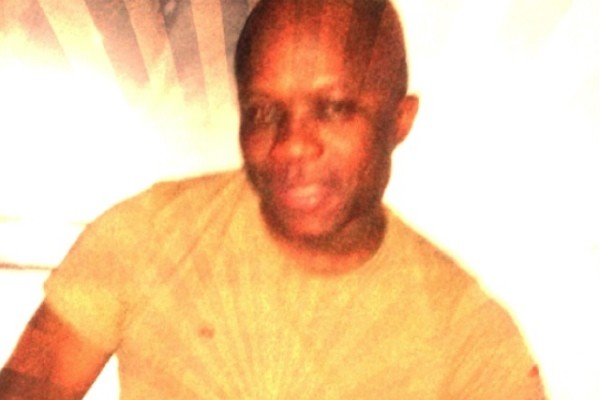
By Matt Cowan
IIt was an off-campus hangout. A place for University of Chicago students to get cheeseburgers and coffee and argue Austrian economics or Kierkegaardian existentialism. It had a name but no one knew what it was. They just called it The Cafeteria. One day, the guy they hired to play music to background the intellectual hum didn’t show up for work. The owner asked the Ghanaian (with some Trinidadian thrown in) kid working as bus boy to cover popping CDs and cassettes (remember those?) in the deck.The moonlighting computer software student let loose with a steady stream of War, Chaka Khan, Bob Marley, Tito Puente, Osibisa, and Oscar Peterson—a multi-ethnic, rhythmic barrage that funked up the non-descript restaurant and got him his first steady gig. He borrowed money from a friend so he could buy one turntable and started staying up all night practicing record spinning. Two decades later, that kid, Kris Graham, is working a whole new technology, playing to much more musically sophisticated crowds and making homemade beats, but he’s still bringing the Afro-world-meets-South-Side-Chicago-meets-cutting-edge-technology flavor that transformed him from busboy to a DJ way back when.
“When things are working right when I’m spinning,” Graham says with his broad, infectious smile, “I feel like the conductor of an orchestra. Ideally, it’s really not about me. A lot of DJ culture now is about the celebrity who’s making the music, but I feel like I want to give energy out and get energy back. That it’s about the music, the crowd, about them looking at each other. Not at me.”
It was that spirit that made Graham one of the originators of brunch house parties—first at the Soho Grand and then at Diva. “I didn’t want it to be all about models and bottles. Maybe it’s part of the Caribbean in me but I just wanted something laid-back where people could chill, dance, have a good time. Not just get wasted and go home and pass out.”

Every DJ in the world thinks it but Kris has the guts to ask the question
The Caribbean in him is just part of his heritage. Raised at different times in eighteen different countries, the nearest thing Graham has to a home is Chicago. Perhaps not coincidentally, the same can be said for house music. Back in the early ‘80s, DJs like Frankie Knuckles and Chip E. took the disco and funk music they listened to at home and bumped it up for ecstatic and eclectic crowds at Chicago clubs like The Loft and The Warehouse.
“The DJs in the early days were like researchers back then. Like anthropologists.” Graham describes. “They’d track down amazing rare songs from all over the world and then play them for people. It wasn’t like it is now when everyone can get whatever they want on the Internet. Back then, the way we learned about new music was from the DJs.”
Like many origin stories, the birth of house music is a little fuzzy. Those pioneers went from playing other people’s music to producing their own tracks—with the ubiquitous 4-beat and the simple, repetitive (some would say hypnotic) lyrics. Young Kris Graham, whose twin obsessions were music and technology, discovered that in house music he had found a home.
After graduating from the University of Chicago at 20, Graham got a job developing software for IBM in upstate New York. “I was doing well then. I bought myself a Porsche. I used to work all week and then zoom down to the city on the weekends. My aunts would take me to the Tunnel and Limelight and Danceteria. I would have to hope they wouldn’t ask me for ID. It was crazy,” he says.
“I loved it. It was so mixed back then too—not like now. The crowds were gay, straight, Black, white and Spanish. And the music was less segregated as well. You could drop a Doors song or some Grandmaster Flash in a house set and people would go crazy for it. Nightlife was crazy. I used to stay out all night and keep a suit at work so I could go right to work.”
His dedication to nightlife, combined with the distance he had to drive to maintain it, was nearly very costly. One snowy night, racing back home, he got in a car accident and was in a coma for a week. After that, he moved to the city. He got an apartment on Bank Street where his next-door neighbor was Grace Jones.
“I talked to her, but I didn’t really get to know her. I’m not sure anyone got to know Grace Jones. She was with whatshisname—from Rocky—Dolph Lundgren at the time. They weren’t too social but I got to know their nanny and their kid [actually Jones’ son with photographer Jean-Paul Goude] pretty well.”
His peripheral relationships with celebrity New Yorkers didn’t end there: “I remember I was spinning occasionally at Nell’s and I brought Vin Diesel over from Save The Robots to maybe work the door. I saw him get into a fight with some guy when I brought him around. Kicked the guy’s ass.”
Graham was a constant presence at the clubs—Nell’s, Danceteria, Limelight, the Tunnel, Giant Step, Soul Kitchen; all the spots. Unlike most of the crowd in that world, Graham did no coke, no ecstasy, and very rarely drank. He liked to stay in control and he was always disciplined. When he wasn’t DJing himself, he was a student of the music and the craft of spinning.
Graham really started to get traction when he took over those brunch decks on Sunday afternoons. He kept blending more and more house music in with the Latin and Caribbean music he’d started off with. He loved playing during the afternoons and relished the mixed crowds he drew.
“I had all kinds there. It was a real party. So much of nightlife now is all about people getting tables and getting drunk. I liked to really have a party.” Graham also made a point never to display any sort of the predatory behavior towards women who gravitate to the DJ booth that so often happens. “Unlike a lot of DJs, I was never in this to get laid.” The ever-present theme – make it about the music.
One of his favorite things to do was to play with a live band and, as a DJ, be one of an interactive many making music rather than always being the sole center of attention. His music has a feel to it that is somehow far more organic and musical than the somewhat chemical grind of the unszt-unszt-unszt that’s usually there. He sounds a little like the computer obsessive love child of Fela Kuti and Lyn Collins.
One veteran club goer and house music aficionado described him thusly: “I may have been born in the ‘70s, but the moment of my conception was at a summer party in East Hampton in the year 2000 when Kris Graham was spinning the most amazing deep house records and I just had to know; where does this kind of music come from?”
Inevitably, Kris had to think about what it meant and means to be a Black DJ in the club world where the majority of both entertainers and clients are not Black. Graham stood out for his deep musical knowledge and his technical proficiency. He’s also one of a relatively small number of Black DJs that plays this genre of music. For whatever reason, the only area dominated by Black people at most clubs that play house music is security detail—but that’s a whole other article.
Head to Gold Bar on Thursdays if you want to hear Kris Graham spin
“I really try not to think about all that too much,” Graham says. “I never really got too pigeonholed as a Black DJ but I have noticed that, to paraphrase Malcolm X, there are house Negro DJs and Field Negro DJs and I won’t say much more than that. Also that in the end, club owners and promoters want to make money and, for some reason, they think that means they shouldn’t let in too many Black people.” Graham makes this analysis not with bitterness, but with the rueful detachment of someone who sees something that’s a pity but knows there’s not much they can do about it.
All through the course of his life as a DJ, Graham kept his day job. In the early 2000s, new software and new technology revolutionized the way music was produced—liberating artists from expensive, inherently collaborative music studios, and allowing anyone with a laptop and the right software to turn their couch into a music studio. And if there’s one thing Graham knows besides music, it’s software.
He now gigs around spots like WiP and Gold Bar, makes appearances at underground Brooklyn warehouse parties, and pops down to Miami and over to Ibiza to do some visiting DJ turns (one of his big breaks came when he flew to Ibiza on his own dime with a satchel full of LPs, talked his way behind a set of turntables, took pictures of himself and sent them out—this was before Facebook and Instagram and all that instant promotion stuff). But he now spends most of his energy making records. He is right at the sweet spot for a man with advanced degrees in music and technology, and a love for the purity of both.
As Graham puts it: “If it’s not deep, it’s not worth a fuck.”