16 Mar 2013
 Posted by Ki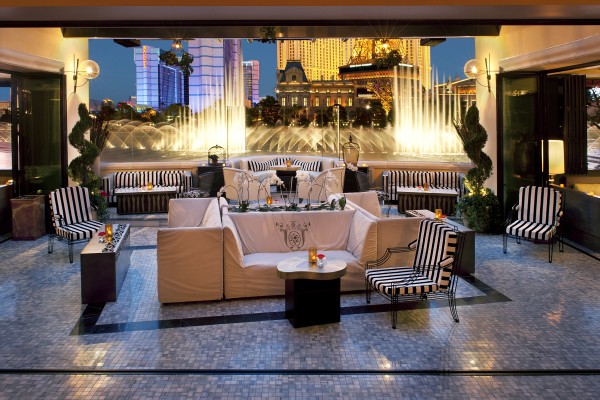
LLooking for a sure-fire bar hustle? Find an unsuspecting sucker, place a wager on the question, “which has more revenue: Mango’s Tropical Café in Miami’s South Beach or 1 Oak in Las Vegas,” wait for your credulous opponent to answer “1 Oak” and collect your winnings. A recent report from Nightclub & Bar magazine ranked the top 100 nightclubs, bars and lounges by gross revenue—surprisingly, Mango’s tied for the number seven spot.
While the nightclub revenue data is self-reported and, as such, inexact and possibly inflated, it feels directionally correct. ADANAI spent some time analyzing the nightclub revenue numbers and found a few interesting nuggets. As part of this analysis, ADANAI has developed and introduces here for the first time its ADANAI Club Efficiency Score system.
Here is Nightclub & Bar’s condensed list of clubs and their corresponding 2012 revenue:

Now, some takeaways:
Nightclubs Are Big Business
The revenue numbers are berserk big all things considering. Each night these establishments roll out their stanchions, they start from zero. Unlike businesses with contracted revenues, nightclubs earn their money one drink, bottle, coat check fee and entry fee at a time.
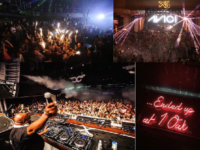
Marquee Las Vegas and XS, numbers one and two on the list, rake in $80-90 million a year. XS is generally open four days a week or 208 days a year. Assuming revenue of $85 million this means they averaging $409K/night. Breaking it down further still, they operate six hours at a pop so that’s about $68K/hour or over $1k/minute! Should you find yourself squeezing into a booth at XS, bear in mind that in the time it takes the DJ to get through the latest five minute Calvin Harris track, the club just made over $5K in sales. No wonder they can afford to pay their DJs so much.
How does an $85 million a year in revenue compare to other well-known businesses? See below:
Milwaukee Bucks (NBA franchise) – $87 million
OWN (Oprah Winfrey’s cable network) – approx. $20 million
Alice + Olivia (clothing company) – $85 million
Size Isn’t Everything
One key part of this exercise was to get a bit more granular with the data. Taking a few pieces of information into consideration—like square footage and hours of operation—ADANAI formulated the ADANAI Club Efficiency Score. This score measures the nightclub’s success in generating revenue by accounting for its size and business practices. Here is the math:
ADANAI Club Efficiency Score = (2012 Revenue) / (Square Feet) / (Total Annual Operating Hours)
So for example Pacha had $20 million of revenue in 2012. Dividing that by 30,000 square feet means they do $667 of revenue per square foot. They are open 936 hours a year so that means they are generating $0.71 per square foot per hour open.
Granted, limitations in the data unduly penalize venues with large outdoor space (such as Marquee Las Vegas and XS) or places that double as restaurants, but ADANAI never claimed to hold a candle to Sir Isaac Newton.
The top performers using this metric are:

Hyde Bellagio leads the pack with the highest ADANAI Club Efficiency Score
Hyde takes the top spot , which makes total sense. It is relatively small and attracts the wealthy Bellagio crowd. The natural progression from James Bond style Baccarat is a gold-plated magnum of Ace of Spades at Hyde, no?

Hyde Bellagio is the most efficient nightclub in the country according to the ADANAI Club Efficiency metric
Tryst and The Bank have a similar dynamic due to their size. LIV is just plain expensive, but people are willing to pay so cheers to LIV. In contrast, The Chandelier Bar at The Cosmopolitan in Las Vegas earns a lowly score of 0.23 because of its 24/7 policy.
Las Vegas; the Nightclub Center of the Universe
Not a shocking revelation, given the sheer magnitude of Las Vegas nightclubs and how much people manage to spend while visiting this destination city. Frolickers from all corners of the world stake their livelihoods on the bright lights of The Strip. Sin City clubs benefit from this constant money flow, from the world-class DJs that greedily follow its trail and from an environment that wholehearted embraces partying. It doesn’t hurt that people who show up in Vegas with $500 occasionally turn that $500 into $1,500 at the gaming tables and choose to blow it on a few bottles of Dom.
So, the dominance of Las Vegas nightclubs among the top 25 on the Nightclubs & Bars list isn’t any wonder.
New York, Miami and Los Angeles – Where you at?
Vegas gets an “A” for excellence, but what about the US’s remaining three major nightlife hubs? Take a look at each city and the issues they face.
New York
New York nightlife shares no parallel. Pacha, Lavo and PHD all sit comfortably at the head of the N&B list. Pacha, one of the few mega-clubs in Manhattan, benefits from pure volume. Lavo and PHD rely on the good boys from the Tao Group to monetize their platinum rolodexes. Expect Marquee 2.0 to register high on the list next year. Finale too.

Marquee New York re-launched with a stage for their top notch DJ talent
Why don’t more New York hotspots make the cut? Simple – real estate. Most successful New York clubs are small. The sweet spot is probably around 3,000 square feet. Crowd curating is an extremely important part of running a successful New York club. With smaller spaces, patron optimization—generating that unique New York energy—becomes more achievable. The high cost of real estate also makes a small club a lot more palatable to investors. The largest fixed cost of any nightlife establishment is the rent. Regardless of if the nightclub is hot, cold, open or closed – the owners have to pay the rent and high rent can make a venture too expensive to launch.
Miami
Miami is an interesting conundrum. It has some of the same characteristics as Las Vegas but for some reason can’t seal the deal. No shocker that LIV earned a spot on the roster. Ever try to get a table there for Tiesto or David Guetta and get the “$10K min for dance floor table” text? More perplexing are Mango’s and The Clevelander, numbers #7 and #14 on the N&B list, respectively. While both dominate the Ocean Drive tourist scene (too bad Wet Willies didn’t make the list), they do not have the cache of a LIV, Mansion or SET.
Mango’s does do a decent amount of bottle service but they make their hay selling a lot of sweet cocktails and basically being open 17 hours a day, 7 days a week. The Clevelander is the biggest outdoor bar in South Beach and gets it done using old school and inexpensive tricks like airing sports (outdoor TVs), promoting happy hour specials and hosting wet T-shirt contests.

Mango’s Tropical Cafe is a South Beach institution – it rules Ocean Drive
So how come Mansion no-shows on the list? Washington Avenue’s crowning achievement re-launched after a big renovation last spring, and it is possible that this year they step it up. But it contends with LIV and Story. In years past, LIV has generally footed the bill for bigger draw DJs (signing some of them to exclusive deals Las Vegas-style) and now, recently opened Story gallops hot out of the gate with a similar heavy on the headliners strategy.
Mansion suffers from an under-appreciation complex—it probably has the best sound system in South Beach. Now that Robert Sillerman has stepped in and is trying to buy up a large part of Miami’s nightlife market (LIV, Story and rumors about the Opium Group properties) it will be interesting to see how it fairs.
Los Angeles
Los Angeles has hot clubs. Bootsy Bellows, Supperclub, Lure, Drais, etc. Here, you’ll find the young, famous and wanna-be-famous set. However, these venues don’t generate Las Vegas numbers for a boatload of basic reasons. For one, the state of California has a 2am last call rule. While people do go out a bit earlier in Los Angeles to compensate, the fact remains that the period to sell booze is still smaller than in 4am states. The movement to change this policy likely won’t gain much momentum.

Photo: Ryan Forbes/Avablu Greystone Manor has done a tremendous job of getting the West Hollywood crowd to spend a lot of money
Los Angeles also relies heavily on vehicular transportation. Sure, people still drink and drive, but on the whole, it cuts down on the number of drinks establishments sell per person. In a weird way too, Los Angeles competes with Las Vegas. The party set often make the five-hour drive to Las Vegas on Friday nights, propelled by the draw of DJ talent and the bevy of swank clubs (not to mention, last call doesn’t exist) And last, Los Angeles is the land of the house party. People do go to house parties in New York but generally, apartments don’t possess a lot of wiggle room so bars and nightclubs substitute as a refuge. A must-attend party at an A, B, C or D-list celeb’s house in Los Angeles beats a night at a club with a 2am cutoff.
Greystone Manor and Avalon Hollywood managed to make the list; all the more impressive given the above constraints.
People Like Pool Parties
Marquee Las Vegas, XS, Surrender (which doubles as Encore Beach Club during the day), the Clevelander, Seacrets and the Pool After Dark all benefit from a very simple concept– if women wear bikinis, men will come. The daytime pool party thrives based on this principle. During summer months in Las Vegas, Saturday and Sunday pool parties rival Saturday nights and Sunday nights. One would think the daytime business would cannibalize the nighttime business but that hasn’t happened for the top-tier nightclubs. The lesser nightclubs feel the pain from Marquee and Encore Beach Club racking up the big bucks during the day. Guys and gals save up all year for one big fun-filled day under the Nevada sun. Party people are using more of their “bottle money” during the day, leaving places like Pure or LAX with a dilemma; lot of people buying drinks, but not bottles (both have experienced serious revenue decline over the past two years.
As discussed in this article on ADANAI, faltering Atlantic City casino Revel is banking on their beach club turning things around. If the beach club at Revel achieves half the success of Marquee or Encore Beach Club, it might just work.
The nightclub business grows larger and larger each year. It has proven to be fairly recession proof. Young and not-so-young adults seem to always find a few extra bucks to attend a good party. The economy is starting to show some life so the nightclub revenue figures coming out of Las Vegas, New York, Miami and Los Angeles should only keep going up. Whether it is pool parties, superstar DJs or selling lots and lots of Bud Light, nightclubs and bars are figuring new (and sometimes old) ways to make as much money as possible.